


What Is a Central Bank?
Every central bank has a job description. It is called a mandate.
The mandate tells the central bank what to do. It guides every rate decision, every statement, every press conference. When the mandate changes, markets move.
For traders, understanding the central bank is not optional. It is how you predict what the Fed, ECB, or BoJ will do next.
This guide explains the mandates of the three most important central banks: the US Federal Reserve, the European Central Bank, and the Bank of Japan. It also asks the uncomfortable questions that experienced traders are thinking.
Why Central Bank Mandates Matter for Traders
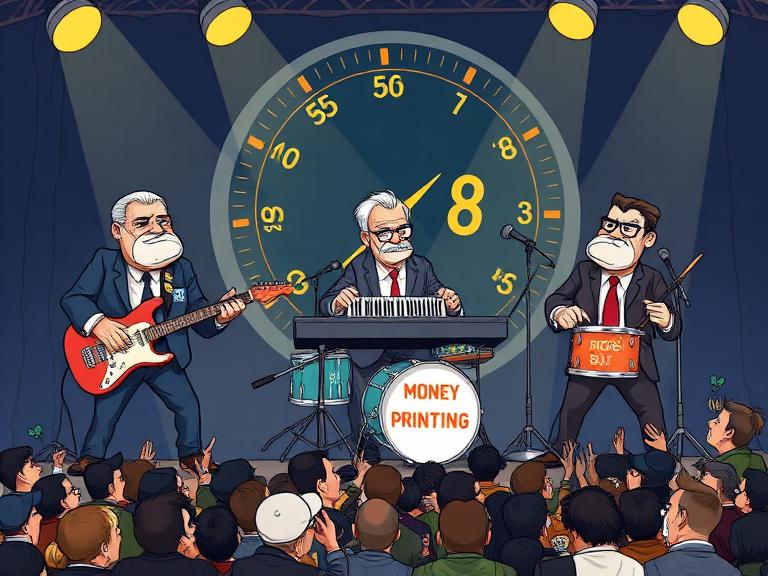
A central bank controls the cost of money. It sets interest rates. It buys and sells bonds. It prints currency.
Every action a central bank takes is justified by its mandate. When inflation rises above target, they raise rates. When unemployment spikes, they cut rates. When the economy stalls, they create new programs.
If you do not understand the central bank , you are trading blind.
As we covered in our [understanding central bank communication] the words a central bank chooses matter as much as the actions they take.
The Federal Reserve (US): Dual Mandate
The US central bank , the Federal Reserve, has two jobs. That is why it is called a “dual mandate.”
Job 1: Maximum employment
The Fed wants as many people working as possible. It does not set a specific number, but it watches unemployment claims, payrolls, and labor force participation.
When unemployment rises, the Fed cuts rates to stimulate hiring. When the labor market is too hot, the Fed raises rates to cool it down.
Job 2: Stable prices
The Fed targets 2% annual inflation as measured by PCE. It uses interest rates to keep inflation near that target.
When inflation is above 2%, the Fed raises rates. When inflation is below 2%, the Fed cuts rates.
You can read the Fed’s full mandate and policy tools directly on their [official website].
Why the Dual Mandate Creates Tension
Sometimes the two goals conflict.
Example: Inflation is high but unemployment is also rising. The central bank must choose. Raise rates to fight inflation? Or cut rates to boost hiring?
This tension is why Fed meetings are unpredictable. Different officials prioritize different parts of the mandate.
For a deeper look at [how the Fed shapes the dollar] our guide covers the transmission channels from rates to currencies.
The European Central Bank (ECB): Price Stability First
The eurozone central bank , the ECB, has a simpler mandate. It prioritizes price stability above all else.
Primary mandate: Keep inflation below, close to, 2% over the medium term
Unlike the Fed, the ECB does not have an explicit employment mandate. It considers growth and jobs, but price stability comes first.
This means the ECB is more hawkish by design. When inflation rises, the ECB raises rates faster than the Fed might. When inflation falls, the ECB is slower to cut.
Why This Matters for EUR/USD
The ECB’s single mandate makes it predictable. Traders know that inflation data matters more than jobs data for ECB policy.
That is why EUR/USD often moves more on Eurozone CPI than on US NFP. The ECB reacts faster to inflation.
The Bank of Japan (BoJ): The Outlier
The Japanese central bank , the BoJ, has the most unusual mandate.
Mandate: Achieve 2% stable inflation “as soon as possible”
The BoJ has struggled with deflation for decades. Prices would not rise. So the BoJ created extraordinary policies: negative interest rates, yield curve control, and massive asset purchases.
Unlike the Fed and ECB, the BoJ does not fight high inflation. It fights no inflation.
Why This Matters for USD/JPY
The BoJ is stuck. It wants inflation but cannot generate it sustainably. So it keeps rates near zero while the Fed and ECB raise rates.
That divergence is why USD/JPY trades near 158. The carry trade is alive. Traders borrow yen at near-zero rates and buy dollars for higher yields.
For more on [trading around central bank divergence] our guide covers how to position before policy meetings.
Other Central Banks at a Glance
| Central Bank | Mandate | Key Difference |
|---|---|---|
| Bank of England (BoE) | Price stability (2% CPI) + support growth and employment | Similar to Fed but inflation target is CPI, not PCE |
| Bank of Canada (BoC) | 2% inflation target (1-3% range) | Explicit agreement with government to keep inflation in range |
| Reserve Bank of Australia (RBA) | Price stability + full employment | Similar to Fed dual mandate |
| Swiss National Bank (SNB) | Price stability + “due regard” for economic developments | Also actively manages CHF exchange rate |
How to Use Central Bank Mandates in Your Trading
Step 1: Know the Mandate
Before any central bank meeting, remind yourself: what is their job?
You can track real-time Fed hike probabilities using the [CME FedWatch tool]
Step 2: Watch the Data That Matters for Their Mandate
- Fed: Payrolls (employment) + PCE inflation
- ECB: CPI inflation (growth and jobs are secondary)
- BoJ: CPI inflation (they want it to rise)
Step 3: Listen for Mandate Language in Statements
A central bank signals policy changes through mandate references.
- “We remain committed to maximum employment” → Fed is dovish
- “We are resolute in bringing inflation back to target” → Fed is hawkish
- “We will continue monetary easing until 2% inflation is in sight” → BoJ is dovish
Step 4: Position Based on Mandate Divergence
When central banks have different mandates, their policies diverge. That creates trends.
- Fed hawkish + ECB hawkish = no divergence
- Fed hawkish + ECB dovish = strong dollar, weak euro
- Fed dovish + BoJ hawkish = weak dollar, strong yen
The Uncomfortable Question: What Is on Their Balance Sheet?
A central bank is no longer just an interest rate setter. It is a market maker, an underwriter, and a risk absorber.
The Fed has trillions in assets. The ECB has underwritten the entire eurozone’s sovereign debt. The BoJ owns a huge chunk of Japanese ETFs.
But here is the question nobody asks: what is a central bank ‘s capital base?
If a regular bank buys risky assets, it must hold capital against them. A central bank ? It prints the money. It sets the rules. It is the lender of last resort.
But if a central bank takes losses, who absorbs them? The taxpayer? Or do they simply print more money and let inflation do the work?
The Greenspan Put and the Moral Hazard
The “Greenspan Put” was the idea that the Fed would step in to save markets whenever they fell. It encouraged excessive risk-taking. It was a causal factor of the 2008 crash.
Today, the Fed put is bigger than ever. Zero rates for years. Trillions in QE. Backdoor guarantees to the private sector.
Stock market highs built on central bank support. How real is that?
How Real Is This Recovery?
The S&P 500 is at all-time highs. The Fed holds trillions. The ECB continues to backstop European debt.
But if the central bank is the only buyer of last resort, what happens when they stop? What happens when they raise rates? What happens when they shrink their balance sheet?
If the answer is “not very real,” that is something to worry about.
For more on [risk management during central bank events] (/guides/risk-management-strategies-stop-loss-orders-position-sizing-and-risk-reward-ratios), our guide covers position sizing before volatile meetings.
The Bottom Line for Traders
A central bank ‘s mandate is its constitution. Every decision is justified by it.
The Fed balances employment and inflation. The ECB prioritizes price stability. The BoJ fights deflation.
When you understand the central bank , you understand the policy. When you understand the policy, you understand the market move.
But do not be naive. A central bank is not a neutral arbiter. It is an active participant in the market. It has a balance sheet. It has political pressures. It has created a moral hazard that has not gone away.
Trade the trend. Respect the Fed. But do not pretend the floor cannot break.
Watch the central bank . The rest follows.
Disclaimer: This article is for educational and informational purposes only. It does not constitute financial advice, trading recommendations, or an offer to buy or sell any asset. Trading forex, commodities, indices, cryptocurrencies, and futures carries significant risk and may not be suitable for all investors. You can lose more than your initial deposit. Past performance does not guarantee future results. Always read full terms, contract specifications, and risk disclosures before trading. Do your own research. Consult a licensed financial advisor if you need professional investment advice.