


Let’s be honest: trading around news releases can feel like gambling. You’re sitting in front of your charts, the countdown to the announcement is ticking away, your heart’s racing, and you’re thinking: “Do I go long? Short? Should I jump in before or wait for the reaction?”
If that sounds familiar, you’re not alone. News events like CPI, NFP, central bank decisions, or GDP numbers get a lot of hype in Forex and for good reason. They can move the market, sometimes violently. But that movement doesn’t always make sense if you’re only watching the headline number. This is where news trading becomes a skill rather than a gamble.
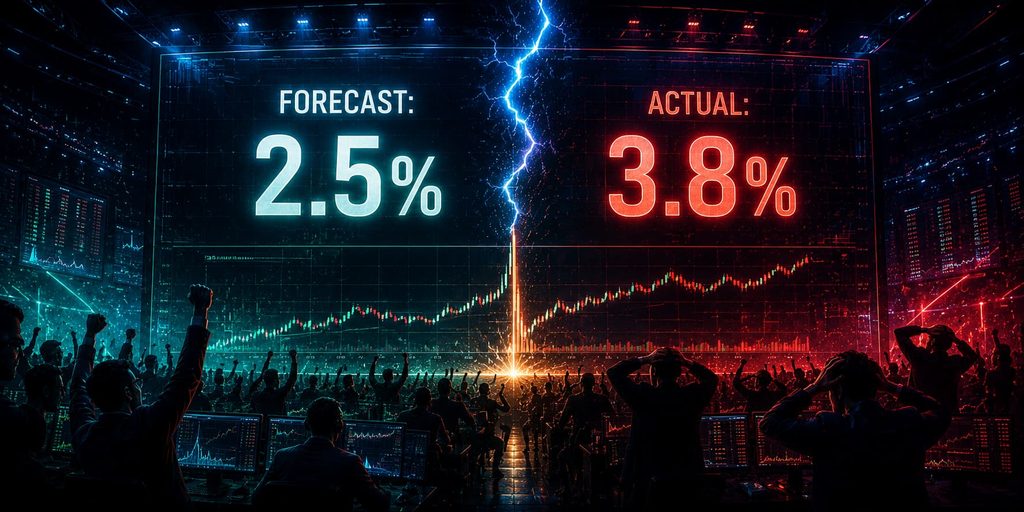
Because here’s the truth no one tells you early on: it’s not the number that moves the market—it’s how that number compares to expectations. And even more than that, it’s about what that number means in the current context. Successful news trading requires understanding this distinction.
For more on the mental discipline required in trading, see our guide on trading psychology and discipline.
Why Trading the News Isn’t About Guessing the Number
There’s a myth that if you can just “guess the number right,” you’ll profit. But the market isn’t a quiz—it’s a complex, living system of expectations, positioning, and narrative. This is the first lesson in news trading.
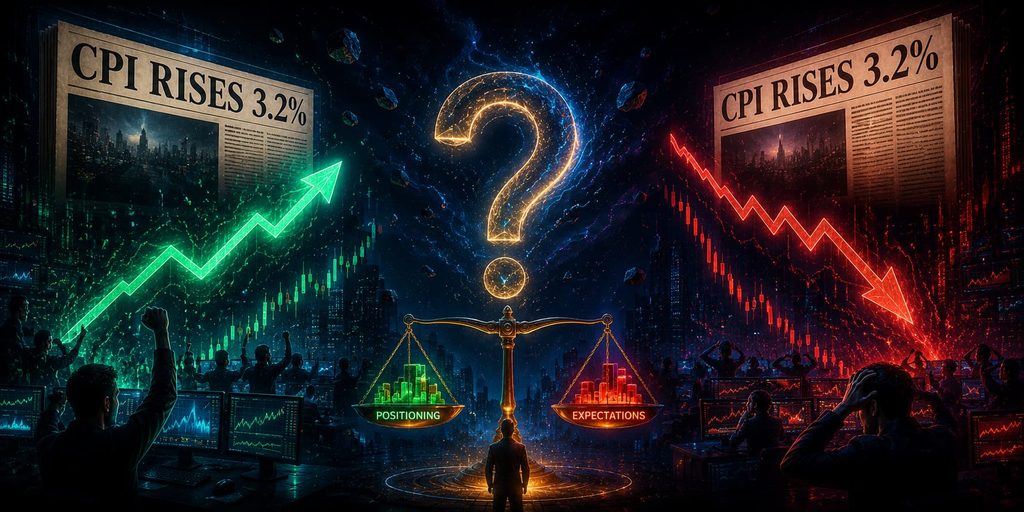
Say CPI comes in hotter than expected. You might think, “That’s bad—sell the dollar.” But maybe the dollar rallies instead. Or maybe it dumps and then reverses hard. Why? Because maybe traders were already expecting a hot number and had priced that in. Or perhaps they believe the central bank won’t react to this data point. Or maybe the broader market is focusing more on growth right now than inflation. This is what makes news trading tricky: the market reacts to surprise and interpretation, not just facts.
Prices move because expectations change. Economic data, central bank meetings, political decisions and unexpected crises continually reshape those expectations, influencing the outlook for growth, inflation, interest rates and risk appetite. In currency markets, central banks act as the main anchor. When traders expect a central bank to raise rates or maintain tight policy for longer, that currency often strengthens, while expectations of cuts tend to weaken it. This is the core of news trading.
Research and market commentary throughout 2024–2025 highlight how shifts in policy projections have driven major exchange-rate moves in both developed and emerging markets. For indices and commodities, macro news adjusts expectations for demand, corporate profits and global trade. Geopolitical headlines involving sanctions, conflicts, trade barriers or supply disruptions often trigger immediate price reactions, particularly in energy markets where futures tend to respond quickly to geopolitical shocks. News trading requires tracking all of these variables.
For more on risk management during high-impact events, see our guide on risk management strategies.
The Economic Calendar as Your Primary Map
Traders encounter news through the economic calendar, which lists upcoming data releases, central bank meetings, political events and other scheduled announcements. A good calendar shows the time, country, indicator name, previous reading, market forecast and, once released, the actual figure. This structure becomes indispensable for navigating macro events. News trading relies heavily on this preparation.
The calendar helps you anticipate volatility. High-impact events such as CPI, NFP or central bank decisions often widen spreads and trigger rapid price adjustments. Knowing exactly when these events occur allows you to reduce exposure, close positions or prepare to trade afterward. This is a key aspect of news trading.
It also gives context. If EUR/USD spikes at a specific minute or an index gaps at the open, linking the move to the calendar prevents you from treating it as noise. Over time, you learn which indicators matter most for each asset and how markets typically respond. News trading becomes more predictable with experience.
Finally, it supports routine. Many traders start their day by reviewing the next 24 hours, noting the two or three events that genuinely affect their open positions. They consider whether markets are leaning in one direction, how previous data surprised, and what scenarios are plausible. This preparation is often more important than the outcome itself. Successful news trading is about preparation, not prediction.
Types of Events That Affect Financial Markets
The first step to understanding how major events affect the financial markets is to get familiar with the different types of events. Financial market events vary in terms of their nature and magnitude. News trading requires understanding these categories.
Many make the mistake of thinking that financial markets are affected only by intrinsic events like a country defaulting on its debt, a company crushing its earning estimations or a whale entering the market for a particular asset. Just the opposite – often, events that might seem partially related to the course of development of financial markets might end up having a massive effect. This is a critical insight for news trading.
This is also valid for the magnitude of events. It doesn’t take a war or a global crisis to destabilize markets. History remembers cases where even small traders, buying and selling futures contracts from their homes, have crashed the entire market. News trading requires awareness of these possibilities.
Macroeconomic Events
Macroeconomic events come in all shapes and sizes. They aren’t just limited to economic or financial nature. The most significant macroeconomic event that determines the market behavior is the supply and demand ratio. The difference between those looking to buy and those looking to sell is the number-one factor affecting the prices of instruments. The rule of thumb is that the market remains flat when both are in equilibrium. When the supply is higher than the demand, the price decreases. And vice-versa – when the supply exceeds the demand, the price increases. Understanding this is fundamental to news trading.
Other notable macro events from an economic character are the monetary and fiscal policies, the publishing of leading indicators, or financial performance data. Some examples include different indices (Consumer Confidence Index, Purchasing Managers Index, Consumer Price Index, Index of Industrial Production, and more), inflation forecasts and reports, quarterly job results, economic predictions, interest rate decisions, all types of regulations related to a particular market, and more. News trading requires familiarity with these indicators.
Microeconomic Events
As their name suggests, the microeconomic events take place on a company level. These events can range from earning reports and performance data (revenue, quarterly profit, etc.), mergers and acquisitions to developing a new line of products or services, personnel changes at a board level, reputational issues, regulatory fines, or more. The bottom line is that these events can lead to internal shifts within the company (e.g., suspension of dividends) that can significantly affect the perception of it in the eyes of investors. News trading extends to corporate events as well.
All this will then be reflected in the price of the stock. The magnitude of the change usually depends on how drastic and sudden these developments are. For example, unexpected events will take a larger toll on the shares’ price than those that are well-known in advance and investors have had enough time to prepare for. This is a key principle in news trading.
Here we should also mention news sensitivity. While news can affect all corners of financial markets nowadays, its effect hits hardest on a corporate level. Even fake news today can trigger a reaction in traders and make them act irrationally (out of fear or greed) before waiting for confirmation. This poses a significant risk to both – companies and their investors. News trading requires discernment between real and fake news.
Other Events
Financial markets don’t react only to economic or financial factors. They are also highly reflective of events, which can be very diverse. For example, let’s take the weather forecasts. They are a crucial factor in commodities markets. Based on the long-term weather forecast, traders can predict the potential trends in crop production and better time their positions. News trading encompasses these unconventional factors.
There are also black-swan events that can affect the market in its entirety. For example, the COVID-19 pandemic is sort of a black-swan event, although the world had been tracking the spread of the virus for a long time. However, few would have anticipated the boom of lockdowns across the globe, which disrupted supply chains for all types of goods. News trading requires awareness of black-swan risks.
Another black swan event that recently took a toll on global markets was the case of the Ever Given. It was a ship that got stuck in the Suez Canal and blocked the most critical trade route in the world. The event affected the oil price, skyrocketed the price of cardboard boxes due to growing online shopping, disrupted global trade, causing shortages of goods, changed the maritime insurance industry, questioned the effects of globalization, and more. All these consequences rippled through different sectors, causing disruptions all around the market. News trading requires understanding these ripple effects.
Speaking about ripple effects, it is essential to note that, due to the growing interconnectedness of global markets, investors today have to be aware of a continuously-expanding risk universe looming over their portfolios. The bottom line is that even if a particular factor doesn’t indicate any relevancy to your trades at first, through its links to other sectors and industries, your positions might be affected as well. Natural disasters, terrorism, war, civil unrest – these and many other factors can pose direct or indirect effects on the financial markets and investors’ risk tolerance. News trading requires a holistic view.
How Events Impact Financial Markets
There are three main ways in which events, regardless of their nature, can impact financial markets. Understanding these is essential for news trading.
First, they can trigger an adverse reaction like a massive sellout, leading to a temporary or long-term crash. Investors’ fear usually triggers such situations. The massive and simultaneous outflow of investors leads to a sudden and typically substantial price decline. News trading requires recognizing these panic moments.
The other way macro-, microeconomic or other types of events can affect financial markets is by creating positive momentum. If the recent developments are a reason for market participants to be optimistic about the particular asset or the entire market, they would be willing to buy and capture the looming bullish trend. Market booms are always caused by events that investors consider favorable for their positions. News trading requires recognizing these optimistic moments.
If some events aren’t considered too important, they might not trigger any reaction from market participants. We refer to situations, where the market doesn’t move or makes only sideways moves, as stagnation. Periods of stagnation indicate that there are no developments worthy of either a positive or a negative market reaction. News trading requires knowing when to stand aside.
How to Prepare for the Impact of Events
Trading mastery lies in the ability to adequately interpret the effect of a particular event on the assets of interest. Furthermore, it requires careful consideration of the timing of this reaction so that the trader isn’t surprised unpleasantly. This is the essence of news trading.
There are two possible ways for traders to prepare for the impact of a particular event on their portfolio – either ex-parte (before it happens) or post-factum (after it happens). News trading requires both.
Market participants get more certainty about the potential response of the market to a particular event if it has been repeated in the past. The more time it has occurred before, the more valid the data is. For example, interest rate changes have happened hundreds, if not thousands, of times before. We have enough behavioral patterns following central banks’ announcements on record to predict what might happen after the next one. This also means our prediction will be pretty accurate. News trading relies on historical patterns.
Most of the time, traders would be looking at economic calendars or earning announcements to see what lies ahead. Then, they will make sure to interpret how these events will affect their portfolios and act accordingly. News trading requires this proactive approach.
On the other hand, there are situations that have never been seen before, or at least the representative sample isn’t as extensive enough to make adequate judgments. Events that hit hard and suddenly, leaving no time for reaction (e.g., flash crashes), also fall in that category. In situations like these, traders usually base their decisions on their expertise and common understanding of market mechanics. In that sense, the ability to draw parallels, map out the interconnectedness, and forecast the potential effect of a particular event is detrimental to success. That is why the more experienced the trader is, the greater the chance to come out of the unpredicted situation unscathed or even profitable. News trading requires experience and adaptability.
Why the Same News Moves Price Differently Each Time
The same news moves price differently because the context around it changes. Price reaction depends on positioning, what was already priced in, and the broader market mood at that moment. This is the most important lesson in news trading.
Three factors decide the reaction:
1. Positioning. If most traders are already long, even good news can trigger selling as they take profit. The crowd has nowhere left to push it.
2. Expectations. A number is only bullish or bearish relative to the forecast, not in absolute terms. Context decides everything.
3. Market mood. In a risk-off environment, traders ignore good news and sell anything risky. In risk-on, they shrug off bad news and keep buying.
This is why two identical CPI prints can produce opposite reactions months apart. The number is the same. The setup around it is not. News trading requires understanding this context.
How Risk-On and Risk-Off Spread One Event Across Markets
A single piece of news rarely affects just one asset. It shifts the overall appetite for risk, and that appetite ripples across every market at once. This is a critical concept in news trading.
- Risk-on. Traders feel confident. Capital flows into riskier assets like equities, indices, and higher-yield currencies. Safe havens get sold.
- Risk-off. Traders get defensive. Capital flees to safe havens like gold, the dollar, and bonds. Risk assets get dumped.
This is why a surprise interest rate decision can move stocks, currencies, and commodities in the same instant. It did not change one asset. It changed how much risk the whole market wanted to hold. News trading requires understanding these risk dynamics.
Reading the direction of capital flow tells you far more than any single chart. According to Reuters Markets, understanding these cross-asset dynamics is essential for modern trading.
Does Price Only Move on News?
No. News is the most visible trigger, but price moves continuously on fundamentals, capital flows, and positioning, even when there is no headline on the screen. News trading is just one part of the puzzle.
Think of a scheduled release as the loud version of something that happens all day long. The market is a constant repricing machine. The same three forces that drive a news spike, information, expectations, and capital flows, are running between every event too. They just move slower and quieter.
These are the drivers working underneath the headlines:
- Fundamentals. Growth, inflation, and earnings expectations shift gradually, not just at release time.
- Central bank policy paths. Traders constantly adjust their bets on where rates are heading.
- Capital flows. Money rotates between assets, sectors, and safe havens based on where the opportunity and the risk sit.
- Institutional positioning. What the biggest players are doing builds over weeks.
- Liquidity and geopolitics. Thin liquidity exaggerates moves. Geopolitical shifts reprice risk in real time.
So news is not the cause of every move. It is the moment all of these forces reprice at once, fast and visible. News trading requires understanding what lies beneath the headlines.
Real Event Mechanics: How News Plays Out
The theory is simple. The execution is where traders get caught. Here is the cause and effect chain on the events that move markets most. News trading requires understanding these mechanics.
CPI (inflation). Hotter than forecast inflation signals more aggressive central bank policy. That repricing of rate expectations hits currencies, gold, and indices within seconds. The surprise versus forecast is everything. A high number that matches expectations is a non-event. News trading around CPI requires watching the core, not just the headline.
NFP (jobs). A strong labor market shifts expectations for the economy and rates. But the reaction depends on what the market already assumed. A blowout number into a market braced for weakness creates the biggest moves. News trading around NFP requires understanding the context.
FOMC (rate decisions). The rate decision itself is often priced in. The real volatility comes from the tone of the statement and the press conference, because that reshapes expectations for future decisions. Traders are not trading today’s rate. They are trading the path of the next six months. News trading around FOMC requires reading between the lines.
In every case, the pattern is the same. New information lands, expectations break, capital reprices, and the move is over before most retail traders understand what happened. News trading requires being prepared for this speed.
Why Retail Traders Get Caught Out
Retail traders get caught out for two reasons: they see the news too late, and they read it without context. By the time a move shows up on the chart, the cause has already passed. This is the biggest challenge in news trading.
Institutions do not have better instincts. They have better information and they get it faster. They see the headline the instant it hits the wire. They know the forecast, the positioning, and the risk environment going in. So when the surprise lands, they already understand what it means and they move first. News trading against institutions is difficult.
The retail trader sees the candle, not the cause. They watch price spike, panic, and chase the move after it is done. They are trading the effect with no view of the cause. This is the information gap. And for decades it was the reason retail traders felt like the market moved against them on every news event. News trading requires closing this gap.
How to Actually Read News as a Trader
To read news correctly, stop watching price and start watching the cause. Track the surprise versus the forecast, the direction of capital flow, and the overall risk mood before you ever place a trade. This is the framework for successful news trading.
The framework is simple:
- Know the forecast before the event. You cannot judge a surprise without a baseline.
- Catch the headline in real time. A reaction you see ten minutes late is a reaction you missed.
- Read the risk environment. Is capital flowing risk-on or risk-off? That sets the direction.
- Match cause to effect. Tie the exact headline to the exact move so you learn the patterns.
- Prepare, don’t predict. Smart traders plan their response to each scenario before the number drops.
The problem is that doing all of this manually means juggling a news terminal, an economic calendar, a sentiment read, and a positioning report at the same time, in the seconds when it matters most. News trading requires a structured process.
A structured process helps remove emotion. Preparation starts hours before the event. You identify which releases matter for your positions. If you are trading USD pairs, a Federal Reserve meeting or inflation print is central. If you trade AUD, labour data or CPI from Australia may take precedence. News trading requires prioritization.
You then consider expectations. Forecast spreads, past volatility and positioning imbalances influence how markets may react. Stretched positioning can make small surprises generate outsized moves. News trading requires understanding positioning.
Next, you decide how to position yourself. Some traders prefer not to hold through major releases. Others reduce size or widen stops. Experienced traders may position into the event, but only with predefined scenarios and clear risk limits. News trading requires discipline.
According to Investopedia, successful news trading requires discipline, preparation, and a clear understanding of market expectations. Without these, trading news is simply gambling.
Cross-Asset Reactions
News rarely affects only one market. Understanding cross-asset dynamics deepens your analysis. In FX, interest-rate expectations dominate. A hawkish shift tends to support a currency, especially against peers with stable or dovish outlooks. News trading requires understanding these cross-asset links.
Indices react mainly through changes in earnings expectations and discount rates. Lower expected rates typically lift equity valuations, while recession fears or unexpected tightening pressure them. News trading around indices requires understanding these dynamics.
Commodities, particularly oil and natural gas, react quickly to geopolitical tensions or supply-chain disruptions. Research shows that energy futures often display the strongest response to geopolitical shocks. News trading around commodities requires tracking geopolitical developments.
Crypto now behaves like a macro-sensitive, liquidity-dependent asset. Rising real yields and tighter policy tend to pressure major digital assets, while expectations of easier conditions often lift them. Because crypto trades continuously, it sometimes becomes an early indicator of sentiment shifts later reflected in FX or equity markets. News trading around crypto requires understanding its macro sensitivity.
Managing Risk Around High-Impact Events
Large intraday moves can tempt traders to increase leverage before news releases, but this is often where accounts take their biggest losses. Effective risk management begins with accepting uncertainty. Reducing position size, using volatility-adjusted stops and avoiding concentrated exposure help protect capital. News trading requires rigorous risk management.
Working with scenarios can be more effective than predicting exact numbers. Instead of forecasting an exact CPI figure, you define outcomes — a hot print, a soft print or something close to expectations — and think through likely market reactions. When the number comes out, you match it to the scenario rather than reacting emotionally. News trading requires scenario planning.
Standing aside is also part of a disciplined approach. Not every event needs to be traded. If uncertainty feels unusually high, or if you are tired, stressed or over-exposed, waiting for clearer conditions is often the best decision. News trading requires knowing when to sit out.
Key Takeaways
- Trading the news isn’t about guessing the number—it’s about understanding expectations, positioning, and context.
- The same news moves price differently because positioning, expectations, and market mood change.
- Price moves on the gap between expectation and reality, not on the news itself.
- If an outcome is priced in, the actual event produces little reaction.
- One event shifts overall risk appetite, which ripples across every market at once.
- News is not the only driver. Price moves continuously on fundamentals, capital flows, and positioning.
- Retail traders lose because they see news late and read it without context.
- The edge is not prediction. It is reading the cause in real time and preparing before the move.
- Stop trading the candle. Start reading the cause.
According to Investopedia, news trading is about understanding how new information reshapes expectations for growth, inflation and monetary policy.
Disclaimer
This article is for educational and informational purposes only. It does not constitute financial advice, trading recommendations, or an offer to buy or sell any asset. Trading forex, commodities, indices, cryptocurrencies, and futures carries significant risk and may not be suitable for all investors. You can lose more than your initial deposit. Past performance does not guarantee future results. Always read full terms, contract specifications, and risk disclosures before trading. Do your own research. Consult a licensed financial advisor if you need professional investment advice.