


The Xi-Trump summit is supposed to happen in Washington on September 24. Chinese President Xi Jinping is scheduled to arrive on September 23, hold talks with US President Donald Trump the following day, and depart on the 25th — his first visit to the US capital in more than a decade, complete with a formal state dinner and a rehearsed military honor guard.
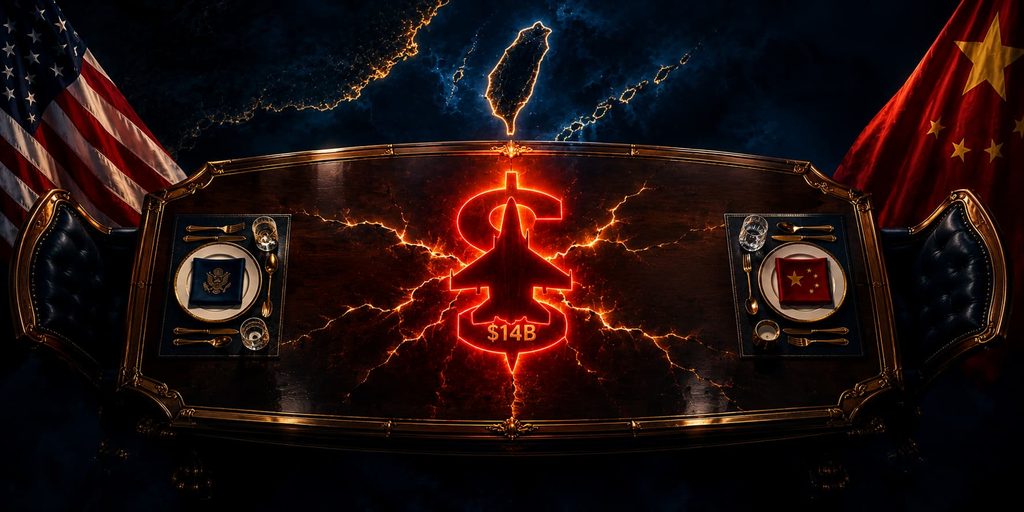
But there is a real problem sitting underneath the pageantry. Beijing has not formally confirmed the visit. The White House has set the date unilaterally, and China has warned, via Kyodo News, that it would cancel the summit outright if Trump approves a pending $14 billion Taiwan arms package before the two leaders meet. Trump has not yet made a final decision on that sale. This Xi-Trump summit could collapse before it starts.
For traders, that changes the entire calculus. A confirmed, friendly summit and a last-minute cancellation are two completely different volatility events, and right now both are still on the table. This Xi-Trump summit guide breaks down what’s actually at stake, what could trigger a collapse, and where the market impact would show up first.
For more on how geopolitical risk moves forex markets, see our guide on geopolitical instability and forex.
Key Takeaways: The Xi-Trump Summit and Its Cancellation Risk
- Beijing has not formally confirmed the summit — only the White House has set the date. This Xi-Trump summit remains unconfirmed on the Chinese side just days before it’s supposed to happen.
- A pending $14 billion Taiwan arms sale is the trigger point — China has warned it will cancel if Trump approves the sale beforehand. This Xi-Trump summit could end before the leaders ever meet.
- Xi is bringing an unusually large CEO delegation — his first major business delegation abroad since 2015. This Xi-Trump summit is being treated by Beijing as a commercial signal, not just diplomacy.
- A trade truce extension covering roughly $30 billion in goods is under discussion — tariff cuts on selected products and reduced duties on Chinese manufacturing inputs are both on the table for this Xi-Trump summit.
- Rare earths remain the bigger lever than tariffs — the one-year Busan export-control truce is running out, and its renewal (or lapse) matters more for industrial and semiconductor supply chains than any tariff headline from this Xi-Trump summit.
- Analysts are calling this a “low expectations” summit — Heritage Foundation, ChinaFile, and multiple other outlets independently reached the same framing in the days before this Xi-Trump summit.
- A Middle East overlay adds friction — reports that Beijing supplied Tehran intelligence ahead of a strike on US troops sit alongside the trade agenda for this Xi-Trump summit.
What Could Cancel the Xi-Trump Summit?
This is the single most important thing for traders to understand about this Xi-Trump summit: it is not yet a done deal.
The White House has confirmed September 24 as the date. China has not made an equivalent formal announcement. That gap matters. Beijing has communicated — through Kyodo News reporting — that it would cancel the visit entirely if Washington approves a $14 billion arms package for Taiwan before Xi arrives. That arms sale already received congressional pre-approval back in January 2025, and it has sat pending ever since. Trump has not yet made a final call on it.
That puts the Xi-Trump summit in a genuinely unresolved position less than a week out. Either Trump holds off on the Taiwan sale and the summit proceeds as planned, or he approves it and Beijing pulls out, or the decision gets deferred past the summit date entirely and the tension carries into the meeting itself.
Analysts are already framing expectations accordingly. The Heritage Foundation’s pre-summit assessment argues this Xi-Trump summit “is unlikely to transform the underlying structure of U.S.–China relations or produce a large number of durable agreements,” and that its success should be judged by implementation of prior commitments rather than new announcements. ChinaFile’s preview similarly flags that “several consequential elements of the relationship remain unsettled” heading into the meeting. A Manila Times report described the run-up as “pomp, low expectations.”
For a trading audience, the cancellation risk is the headline, not a footnote. A downgraded or cancelled Xi-Trump summit would likely revive the trade-friction narrative that had eased since the two leaders’ May meeting in Beijing — with direct implications for agricultural exporters waiting on promised Chinese soybean purchases and aerospace names exposed to a stalled Boeing order.
For more on how political events shape currency values, see our guide on political events and forex.
Inside the Trade Truce Extension
Trade is the part of this Xi-Trump summit most likely to produce something concrete, even if a cancellation doesn’t materialize.
US Treasury Secretary Scott Bessent is set to meet Chinese Vice Premier He Lifeng this weekend, ahead of the Xi-Trump summit itself. Washington and Beijing have reportedly been discussing tariff reductions covering around $30 billion in goods, building on an earlier framework for reciprocal cuts. Under one version of the proposal, some Chinese products could receive most-favoured-nation tariff treatment. Separately, the two sides have also been exploring reduced duties on Chinese inputs used by US manufacturers — a change that would matter more to industrial supply chains than to headline trade-balance numbers.
A Reuters factbox outlines the specific trade items under discussion ahead of the leaders’ meeting, including tariff reductions and agricultural purchase commitments.
None of this amounts to a comprehensive trade agreement. US Trade Representative Jamieson Greer has said Washington’s goal is to manage the relationship rather than negotiate a sweeping deal. That framing matters for how traders should read anything that comes out of this Xi-Trump summit: a specific, itemized list of tariff cuts would carry real weight, while another vague commitment to “keep talking” would not move markets much at all.
An extension of the roughly year-long trade truce would remove one source of uncertainty at a moment when markets are already dealing with elevated oil prices, renewed inflation concerns, and separate wars in Iran and Ukraine weighing on borrowing costs. That’s part of why this Xi-Trump summit is being watched well beyond China-specific desks.
Agriculture — the Easiest Win for This Xi-Trump Summit
If any single sector produces a genuine deliverable from this Xi-Trump summit, agriculture is the most likely candidate.
China has already stepped up purchases ahead of Xi’s visit, buying around 1 million tonnes of US soybeans recently, pushing cumulative purchases closer to an annual commitment of 25 million tonnes through 2028. China still applies an additional 10% tariff on top of US goods, meaning any tariff relief announced at this Xi-Trump summit could encourage private Chinese buyers — not just state-directed purchases — to return to the market in volume.
Watch for larger agricultural purchase commitments, explicit tariff cuts, and the removal of non-tariff barriers as the concrete markers of a real agricultural outcome from this Xi-Trump summit, rather than another vague statement of goodwill.
For more on how trade wars move currency values, see our guide on trade wars and forex.
Rare Earths: The Bigger Lever This Xi-Trump Summit Could Pull
Tariffs get the headlines, but rare earths may matter more for markets coming out of this Xi-Trump summit.
China’s dominance of rare-earth processing means its export restrictions can affect industries far beyond mining. Materials like yttrium show up in aerospace components, semiconductor manufacturing, and jet-engine coatings — meaning a change in Chinese export policy ripples through sectors that have nothing to do with mining directly.
There’s a specific mechanism here worth understanding before this Xi-Trump summit: the export-control truce reached at the Busan Summit on October 30, 2025 holds both Washington’s Affiliates Rule and China’s rare-earth export-control package (dated October 9) in abeyance. That truce runs for one year. Its renewal — or lapse — is one of the more consequential unresolved items heading into the Xi-Trump summit, and it has received far less attention than tariffs.
Any improvement in access to Chinese rare-earth supplies could ease pressure on parts of the US industrial supply chain. But it cuts both ways — easier Chinese exports could also reduce the geopolitical scarcity premium currently supporting companies building alternative, non-Chinese rare-earth supply chains. If restrictions tighten instead of easing, that dynamic would run in reverse. This Xi-Trump summit is a genuine two-sided trade for anyone positioned in this space.
AI, Chips, and the Limits of What This Xi-Trump Summit Can Deliver
AI has become its own diplomatic track ahead of this Xi-Trump summit, separate from the broader trade conversation. US and Chinese officials have reportedly been discussing risks including AI-enabled cyberattacks and autonomous military systems, and preparations for a formal bilateral AI risk-and-safety dialogue are said to be underway, though its timing and participants remain unsettled.
Traders need to draw a hard line here: AI safety cooperation is not the same thing as semiconductor export relief. Restrictions on advanced chip sales into China remain a far harder issue than AI dialogue, and any actual change to the rules governing AI chip or semiconductor equipment exports would have a much more direct earnings impact than broad cooperation language on AI safety. It would be a mistake to read progress on one as progress on the other coming out of this Xi-Trump summit.
Nvidia is likely to be the most headline-sensitive name here, with CEO Jensen Huang expected to attend the state dinner alongside Apple’s Tim Cook and OpenAI’s Sam Altman. But the substance to watch is export licences and specific equipment restrictions — not who’s sitting at the dinner table.
Xi’s Unusually Large CEO Delegation
One detail from this Xi-Trump summit hasn’t gotten as much attention as it deserves: Xi is reportedly bringing a large delegation of Chinese corporate executives to Washington, an unusual move given that many Chinese business leaders fell out of favor after Beijing’s regulatory crackdowns on technology, education, and property companies beginning in 2020.
Xi’s last major business delegation to the US was in 2015, when he traveled with Alibaba founder Jack Ma, Tencent founder Pony Ma, and executives from major Chinese banks and state-owned companies. That visit produced a $38 billion agreement for 300 Boeing aircraft. The specific executives joining this Xi-Trump summit delegation haven’t been confirmed, but the signal is clear: Beijing wants to demonstrate support for US investment and commercial ties at a moment when Chinese companies face growing scrutiny over their American holdings.
For traders, this is a soft but real signal that Beijing intends to show up with something to offer commercially, even amid the Taiwan tension — a detail that argues against reading this Xi-Trump summit as purely adversarial theater.
Where Volatility Could Show Up
This section maps the specific names and sectors most exposed to whatever comes out of the Xi-Trump summit — or its cancellation.
Aerospace: Boeing, GE Aerospace
China committed to 200 Boeing aircraft following the leaders’ May meeting in Beijing. Traders should watch for confirmation of that commitment, new delivery details, or any expansion of the order at this Xi-Trump summit. Boeing CEO Kelly Ortberg has already played down expectations of another large China order, which raises the bar for what would actually count as a positive surprise.
Agriculture: ADM, Bunge
Agriculture offers one of the clearest paths to a tangible outcome from this Xi-Trump summit, given China’s recent step-up in soybean buying. Soybean futures are likely to show the most direct reaction, with agricultural processors also exposed depending on the scale and structure of any purchase commitments.
Rare Earths: MP Materials, USA Rare Earth
This is a genuinely two-sided trade around the Xi-Trump summit. Easier Chinese export licences would benefit aerospace, semiconductor, and energy companies by reducing supply risk, but could also strip away some of the scarcity premium currently supporting US-based alternative suppliers. Tighter restrictions would flip that dynamic.
Semiconductors: Nvidia, AMD, Applied Materials, Lam Research, KLA, ASML, TSMC
The key distinction, again, is AI cooperation versus actual chip-export relief. Watch export licences, specific chip models, and equipment restrictions — not just headlines about AI dialogue — for the real market-moving signal from this Xi-Trump summit.
China and Hong Kong Equities: Hang Seng Tech, Alibaba, Tencent, JD.com
These names function as the broad sentiment trade around the Xi-Trump summit. Concrete tariff relief or a stable, confirmed meeting could compress some of the geopolitical risk premium priced into Chinese assets. Constructive rhetoric without tangible policy change — or an outright cancellation — would likely produce a much less durable reaction, or a negative one.

The Middle East Overlay on This Xi-Trump Summit
Trade and Taiwan aren’t the only pressure points heading into next week’s meeting. Chinese Foreign Minister Wang Yi and US Secretary of State Marco Rubio also discussed the Middle East during a call ahead of the meeting, following Wang’s own meeting with Iranian Foreign Minister Abbas Araghchi in Beijing.
Wang urged both Iran and the US to remain rational, exercise restraint, return to the interim peace deal signed in June, and reopen the Strait of Hormuz. That diplomatic language sits alongside separate reporting that Beijing supplied Tehran with intelligence ahead of a strike on US troops — a genuinely serious allegation that adds friction to the broader relationship independent of trade or Taiwan.
For traders, the Middle East angle matters because it’s feeding into the same oil-price and risk-sentiment backdrop that’s already pressuring markets. A meeting that goes badly wouldn’t just move China-exposed equities — it would add to an already elevated geopolitical risk premium across oil, rates, and safe-haven currencies.
The timing compounds the problem. Trump’s separate confrontation with Iran is already running in parallel with the run-up to this Xi-Trump summit, and Beijing has its own reasons to want that conflict contained — China depends heavily on energy flows through the Strait of Hormuz, and continued instability there raises costs for an economy that is simultaneously trying to project commercial goodwill toward Washington through Xi’s own CEO delegation. That contradiction — wanting de-escalation in the Gulf while allegedly supplying intelligence to the other side — is exactly the kind of inconsistency that could resurface awkwardly during the meeting itself, particularly if reporters press either leader on it at the post-meeting press conference.
How Markets Reacted to the May Beijing Summit — A Precedent for This Xi-Trump Summit
This isn’t the first Trump-Xi meeting of 2026. The two leaders held their first summit of the year in Beijing in May, and the market reaction from that meeting offers a useful, if imperfect, precedent for what traders might expect from next week’s talks.
That meeting produced a handful of concrete-sounding outcomes: the 200-aircraft Boeing commitment referenced earlier, the concept of “constructive strategic stability” as a shared diplomatic framing, apparent alignment on not wanting Iran to obtain a nuclear weapon, Chinese purchases of US agricultural products, and the creation of a US-China Board of Trade and a parallel Board of Investment. On paper, that’s a reasonably full agenda of deliverables.
In practice, several of those May commitments remain only partially implemented four months later — which is precisely why the Heritage Foundation and other analysts are framing the September meeting around implementation rather than new promises. The Busan export-control truce reached at the end of October 2025 built on the May groundwork but didn’t resolve the underlying rare-earth tension, just deferred it for a year. The Boeing order Ortberg is now downplaying was, in part, a product of the May meeting. And the AI dialogue agreed to in May still hasn’t produced a confirmed schedule.
The lesson for traders positioning around next week’s meeting: headline commitments announced in the room tend to matter less than whether they actually get implemented in the weeks that follow. A repeat of May’s pattern — a warm joint statement followed by slow, partial follow-through — is arguably the base case, with outright cancellation and a genuinely comprehensive deal as the two tail-risk scenarios on either side.
Currency Implications: What This Xi-Trump Summit Means for USD/CNH and Risk FX
For a forex-focused audience, the currency angle of this meeting deserves its own treatment, separate from the equity and commodity exposures covered above.
The offshore yuan (USD/CNH) is the most direct read on sentiment here. A confirmed meeting with tangible trade deliverables — a specific tariff-cut list, confirmed agricultural purchases — would typically support the yuan and pressure USD/CNH lower, reflecting reduced trade-war risk premium. A cancelled or downgraded meeting would likely do the opposite, pushing USD/CNH higher as capital outflow concerns and renewed tariff-war pricing return.
Beyond the yuan directly, this meeting is also a risk-sentiment event for the broader FX complex. Commodity-linked currencies — the Australian dollar in particular, given Australia’s trade exposure to China — tend to trade as a proxy for China sentiment even when the news itself has nothing to do with Australia specifically. A positive outcome here would likely see AUD/USD firm alongside Chinese equities; a cancellation would likely see it sell off in sympathy.
Safe-haven flows are the other side of this trade. Given the Middle East overlay and the elevated Treasury-yield backdrop already in play, a cancelled Xi-Trump summit stacked on top of existing geopolitical stress could accelerate flows into the yen and gold simultaneously — a combination that doesn’t always move together, but tends to when multiple risk factors compound at once rather than arriving in isolation.
What Happens Next: Scenario Table for This Xi-Trump Summit
| Scenario | What Triggers It | Likely Market Reaction |
|---|---|---|
| Summit proceeds as planned | Trump defers the Taiwan arms decision past September 24 | Modest relief rally in China/HK equities, soybean futures firm, muted reaction elsewhere given “low expectations” framing |
| Summit proceeds with concrete trade deliverables | Tariff cuts and agricultural commitments are formally announced | Stronger reaction in ADM, Bunge, soybean futures, and Hang Seng Tech names; reduced geopolitical risk premium |
| Summit is downgraded or delayed | Taiwan arms decision remains unresolved but isn’t formally approved | Elevated uncertainty, choppy price action across China-exposed names without a clear directional resolution |
| Summit is cancelled | Trump approves the $14B Taiwan arms sale before September 24 | Sharp risk-off move in China/HK equities, renewed trade-friction narrative, pressure on Boeing and agricultural names tied to pending Chinese commitments |
This Xi-Trump summit table is a framework, not a forecast — treat each scenario as a conditional to monitor, not a prediction of which one occurs.
Key Conditions to Watch Before the Xi-Trump Summit
Beyond the seven takeaways above, there’s a shorter list of specific, checkable conditions that will tell traders which scenario is actually unfolding in real time, rather than relying on headline tone alone. These are the data points worth setting an alert for over the next several days, since several of them could shift with little warning given how compressed the timeline has become.
- Whether Trump makes a final decision on the $14 billion Taiwan arms sale — and when. This is the single biggest variable for this Xi-Trump summit.
- Whether Beijing issues a formal confirmation of the visit. Its continued absence this close to September 24 is itself a signal worth tracking.
- Whether the Busan rare-earth and Affiliates Rule truce gets extended, left ambiguous, or allowed to lapse. This matters more than any single tariff headline from this Xi-Trump summit.
- Whether a specific, itemized tariff-cut list emerges from the Bessent–He Lifeng meeting, rather than another general statement of intent.
- Whether Boeing confirms or expands the 200-aircraft commitment, given Ortberg’s already-lowered expectations.
- Whether the AI risk-and-safety dialogue produces a defined timeline, and whether any language at all changes around semiconductor export rules specifically.
- Whether Xi’s CEO delegation list is confirmed, and which sectors it represents — a signal for where Chinese commercial interest is actually concentrated.
Taken together, these seven conditions form a rough scorecard. A trader checking the news the morning of September 24 can run through this list quickly and get a reasonable read on which of the four scenarios in the table above is playing out, well before any official joint statement is released. That’s a more useful exercise than waiting for a single dramatic headline, since — as the May summit demonstrated — the real substance tends to emerge in the details released over the following days and weeks, not in the handshake photo itself.
Where This Leaves Traders: The Xi-Trump Summit Conclusion
The Xi-Trump summit sits in a genuinely unresolved position days before it’s supposed to happen. Beijing hasn’t confirmed it. A pending $14 billion Taiwan arms sale could cancel it outright. And even if it proceeds, analysts across the board are framing it as a low-expectations event unlikely to produce a comprehensive agreement.
That doesn’t mean there’s nothing to trade. Agriculture offers the clearest path to a concrete, tradeable announcement. Rare earths and the Busan truce matter more than tariff headlines for industrial and semiconductor supply chains. AI cooperation and chip-export relief are two different things, and conflating them is a mistake. And the unusually large CEO delegation Xi is reportedly bringing suggests Beijing wants this to look commercially constructive, even with Taiwan hanging over it.
The bottom line: Don’t trade the handshake. Trade the details — or the absence of them. This Xi-Trump summit could be a modest, manageable diplomatic event, or it could not happen at all. Both outcomes are still live, and traders positioned in Boeing, agricultural names, rare-earth suppliers, semiconductors, and China/Hong Kong equities should have a plan for either one.
The Xi-Trump summit was supposed to be about trade. Right now, it’s about whether it happens at all.
Disclaimer
This article is for educational and informational purposes only. It does not constitute financial advice, trading recommendations, or an offer to buy or sell any asset. Trading forex, equities, commodities, and futures carries significant risk and may not be suitable for all investors. You can lose more than your initial deposit. Past performance does not guarantee future results. Always read full terms, contract specifications, and risk disclosures before trading. Do your own research. Consult a licensed financial advisor if you need professional investment advice.