


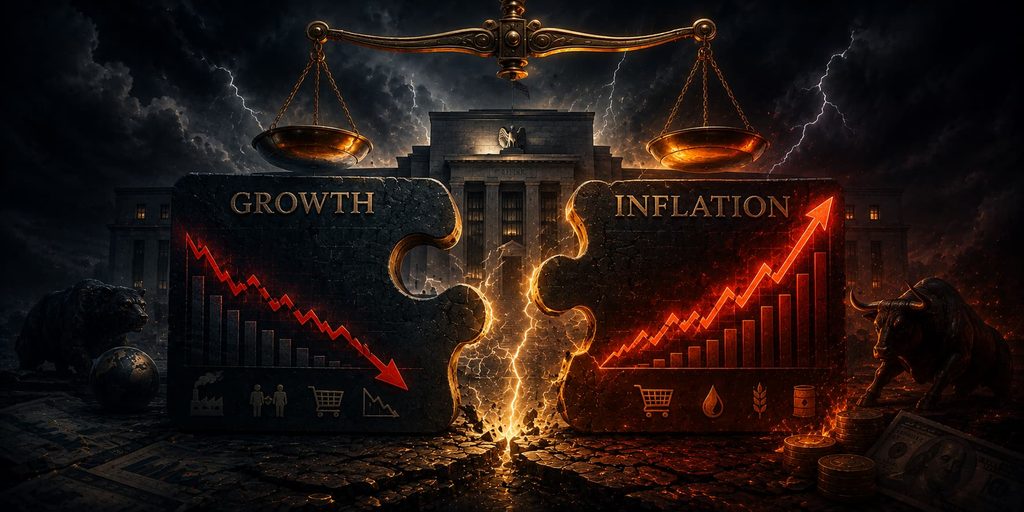
Kevin Warsh gets his first Jackson Hole as Fed Chair in the same week the market receives US core PCE, the second estimate of Q2 GDP, Australian CPI and Canadian GDP. The Fed has an inflation problem and it is developing a growth problem, and trying to fix one risks making the other worse. This Sunday preview tells us whether Warsh is willing to choose a side, and the suspicion is that he will not. This Sunday preview covers everything you need to know for the week ahead.
The Fed sits at 3.50% to 3.75% after a July meeting where three members wanted a hike and nine did not, and it has not given markets a sequence of rises to price. Since then US employment unexpectedly declined, retail sales fell and consumer sentiment deteriorated, so a strong majority of economists now expect no change for the rest of 2026, with roughly a one-in-three chance of a September hike still priced. At the same time long dated Treasury yields reached about 5.34% on the 30 year, the highest since 2007, until the US Treasury doubled certain buyback operations for 10 to 30 year debt.
Yields fell, the dollar sold off to a three month low against the euro and gold surged more than 3%. Wednesday brings core PCE and the Q2 GDP revision, Australia reports CPI the same day, Canada reports GDP on Friday, and Warsh speaks at Jackson Hole. Growth against inflation is the entire trade. This Sunday preview tracks all of these forces.
For more on how the dollar moves gold, see our guide on how the dollar moves gold.
Sunday Preview: What Matters This Week
US core PCE and Q2 GDP, Wednesday 13:30 London. The Fed’s preferred inflation measure was 3.3% year on year in June, still well above the 2% target, and it lands alongside the second estimate of Q2 GDP, which showed 1.5% annualised growth against 2.1% in the first quarter. Both halves of the Fed’s problem, in one release, two days before Warsh speaks. This Sunday preview considers this the most important data day of the week.
Australian CPI, Wednesday 02:30 London. June headline was 3.8% year on year with trimmed mean still elevated, but unemployment has since risen to 4.5%, the highest in almost five years. The RBA is at 4.35% and facing its own version of the same inflation against growth trade-off.
Jackson Hole, Thursday to Saturday. Warsh’s first appearance as Chair. The official theme is financial innovation, but FX, gold and bond desks are there for the reaction function. Whether he pushes back on the reduction in hike expectations is the trade. This Sunday preview flags Jackson Hole as the main event.
Canada GDP, Friday 13:30 London. June monthly GDP and the full Q2 national accounts. May grew 0.3% and the advance estimate pointed to another 0.2% in June, so the question is whether the recent improvement has genuine momentum.
Sunday Preview: The Calendar
| Day | Event | Previous | Why It Matters |
|---|---|---|---|
| Wed 26 02:30 | Australia CPI, July | 3.8% y/y headline (June) | Decides whether another RBA hike stays in the conversation |
| Wed 26 13:30 | US core PCE, July | 3.3% y/y (June) | The Fed’s preferred inflation gauge, two days before Warsh speaks |
| Wed 26 13:30 | US GDP, Q2 second estimate | 1.5% annualised advance | The growth side of the stagflation question |
| Thu 27 to Sat 29 | Jackson Hole symposium | Theme: financial innovation | Warsh’s first as Chair. The reaction function is what markets want |
| Fri 28 Warsh speaks | Jackson Hole | Held 3.50% to 3.75% in July | Hawkish tone squeezes the dollar. Growth focus keeps it under pressure |
| Fri 28 13:30 | Canada GDP, June and Q2 | +0.3% m/m (May) | Whether Canadian momentum is real. Supportive for CAD if it is |
Sunday Preview: The Dollar’s Different Problem Now
Normally, higher US interest rates and higher Treasury yields can be very supportive for the dollar. That makes sense. If investors can earn a better return holding dollar denominated assets, global capital has an incentive to move towards the United States. Money comes in. Demand for dollars increases. The currency benefits. But that relationship works best when yields are rising for what could be called the right reasons. Strong economic growth. A resilient labour market. Healthy consumer demand. A central bank keeping policy tight because the economy can handle it. This Sunday preview explains why that relationship has broken down.
That is a very different environment from the one where investors start saying: “If you want me to lend the US government my money for the next 20 or 30 years, you’re going to have to pay me considerably more.” That second type of yield rise can tell you something much less comfortable. It can tell you the market wants compensation for risk. Inflation risk. Fiscal risk. Supply risk. Policy uncertainty. And increasingly, concerns over the trajectory of US growth itself. That is the distinction that matters most for the dollar now. This Sunday preview considers this the most important distinction in markets.
The recent data has started giving us evidence that parts of the US economy are losing momentum. July retail sales contracted by 0.6% from the previous month. That matters because the US consumer is an enormous part of the economy. When people become less willing or less able to spend, that slowdown eventually feeds through businesses, hiring, investment and growth. The labour market has also weakened. US nonfarm payrolls fell by 23,000 in July. More importantly, the previous two months were revised significantly lower, with May and June employment gains reduced by a combined 103,000 jobs.
That changes the picture. You’re no longer looking at one strange employment report in isolation. You’re starting to see a broader loss of momentum.
Wages aren’t exactly screaming overheating either. Average hourly earnings were virtually unchanged in July, rising by only two cents from June, with annual wage growth running at 3.2%. Then look at the consumer. The University of Michigan’s preliminary consumer sentiment index dropped to 51.0 in August from 55.2 in July. So you’ve got weaker spending. Softer employment. Slower wage momentum. Consumers becoming increasingly uncomfortable. You can see where this starts going. Growth risk is becoming harder to ignore. This Sunday preview tracks this deterioration.
Sunday Preview: Why the Fed is Stuck
Now bring the Federal Reserve into it. At its July meeting, the Fed left rates unchanged at 3.50% to 3.75%. Three members wanted an immediate hike. Nine didn’t. That was a hawkish split, but it was not a commitment to further tightening. And that distinction matters. Warsh talked tough on inflation, but neither the statement nor his communication gave markets a clear sequence of rate hikes to price. The Fed effectively sat on the fence. This Sunday preview considers this the defining feature of the current regime.
Not because inflation had disappeared. It hadn’t. Because the other side of the economy was becoming increasingly difficult to ignore. Since then we’ve seen softer labour-market data, weaker retail sales and a deterioration in consumer sentiment. July employment unexpectedly declined. Retail sales fell. And the market began cutting back the amount of near term Fed tightening it expected. A Reuters poll last week found a strong majority of economists now expect the Fed to leave rates at 3.50% to 3.75% for the remainder of 2026. Markets are not completely ruling out tightening.
Going into this week, pricing still implies roughly a one-in-three probability of a September hike, with significantly more tightening risk priced by December. But compare that with where expectations were only a few weeks ago. The direction of travel has changed.
That has been part of the pressure on the dollar. And now Warsh gets one of the biggest platforms available to a Federal Reserve chair. This Sunday preview prepares you for Warsh’s speech.
Sunday Preview: Jackson Hole – Warsh’s First Major Test
The Federal Reserve Bank of Kansas City’s Jackson Hole Economic Policy Symposium runs from August 27 to 29. This year’s official theme is “Financial Innovation: Implications for Payments and Policy.” Markets will obviously care about that. But that is not the reason FX, gold and bond traders will be sitting on every word Warsh says. This is Warsh’s first Jackson Hole appearance as Federal Reserve Chair, and it arrives after one of the messiest stretches for US monetary policy since he took over. The market wants to know what his reaction function actually is.
Because at the moment, the Fed faces an extremely unpleasant combination. Inflation remains above target. Oil remains elevated. Geopolitical tension continues to create the possibility of another energy shock. At the same time, parts of the US economy are slowing. That is a stagflationary mix. This Sunday preview highlights the stagflation risk.
And it creates a horrible policy choice. Raise rates to attack inflation and you risk tightening into a slowing economy. Stay put and you risk allowing inflation to remain elevated for longer. Cut rates and the inflation problem becomes even more uncomfortable. So when I say I expect Warsh to sit on the fence again, I don’t mean his speech will be irrelevant. Quite the opposite. The fence itself is the trade. If Warsh says inflation remains unacceptable but refuses to commit to another hike, that confirms the same tension we saw at the July FOMC.
If he spends more time discussing weakness in employment, consumption or economic activity, markets are likely to hear something even more significant: The Fed itself is becoming increasingly worried about the growth side of the equation. Coming directly from the Fed Chair, that would give the stagflation conversation significantly more weight. And for the dollar, that matters. This Sunday preview considers Jackson Hole the most important event of the week.
Sunday Preview: What Would Be Dollar Bearish from Jackson Hole?
The cleanest dollar bearish outcome is not Warsh suddenly promising rate cuts. That is probably asking the wrong question. The more realistic bearish outcome is subtler. Warsh acknowledges inflation remains above target. He reiterates that the Fed is committed to price stability. But he places more emphasis on slowing employment, weaker demand or increasing downside risks to growth. And crucially, he does not push back hard against the reduction in rate hike expectations that has already happened.
That would tell markets: The bar for another hike is high. The Fed sees the growth deterioration. And policy is likely to remain on hold while it waits for more information. If front end yields respond lower and rate hike probabilities fall further, the dollar could remain under pressure. That would fit the regime we have been discussing for the last couple of weeks. This Sunday preview outlines this scenario.

Sunday Preview: What Would Make the Dollar Squeeze Higher?
There is an obvious risk to being too comfortable with dollar downside. Warsh could decide Jackson Hole is where he restores some inflation-fighting credibility. Remember, three members already wanted a hike in July. The minutes showed many officials believed tighter policy could eventually become necessary if inflation failed to fall. So if Warsh comes out and effectively says: Markets have become too relaxed about inflation. The energy shock is more persistent than expected.
The recent easing in financial conditions is undesirable. And further tightening remains very much on the table. Then you can get the opposite move. September hike probabilities move higher. Front end yields rise. The dollar squeezes. Gold initially comes under pressure. That is why Wednesday’s data matters so much. Because before Warsh speaks, he gets fresh evidence on both sides of the Fed’s problem. This Sunday preview flags this upside risk.
Sunday Preview: Wednesday – Core PCE Could Set Up the Entire Jackson Hole Trade
The biggest scheduled US data release of the week comes on Wednesday. July Personal Income and Outlays. Inside that report is core PCE, the Fed’s preferred measure of underlying inflation. The BEA releases it alongside the second estimate of Q2 GDP at 8:30 a.m. Eastern. Core PCE was running at 3.3% year on year in June, still comfortably above the Fed’s 2% inflation target. The market is currently centred around another fairly modest monthly increase in July. But this is one of those occasions where the number itself is only half the trade. Ask what it does to Wednesday’s Fed pricing. This Sunday preview considers this the most important data release of the week.
Softer core PCE: If underlying inflation comes in softer than expected, the immediate question becomes: Why does the Fed need to hike into a weakening economy? That would reinforce the recent reduction in September tightening expectations. It would make Warsh’s task at Jackson Hole even harder if he wanted to deliver a hawkish message. And, all else equal, that combination would likely remain negative for the dollar and supportive for gold.
Hotter core PCE: A materially stronger reading changes the conversation. Now the Fed has evidence that underlying inflation is not cooling enough, despite weaker activity. That does not eliminate the growth problem. It makes the stagflation problem worse. Initially, markets could increase rate hike pricing, pushing shorter dated yields and the dollar higher and putting pressure on gold. But watch the curve very carefully.
If hotter inflation pushes long dated yields higher because the market demands an even larger inflation premium, yet the dollar struggles to benefit, that would be another warning that the relationship between US yields and the currency is becoming increasingly uncomfortable. That would be much more interesting than the headline PCE number itself. This Sunday preview highlights this dynamic.
Sunday Preview: US GDP – Is the Slowdown Becoming Harder to Dismiss?
The other major US release on Wednesday is the second estimate of Q2 GDP. The advance estimate showed the US economy growing at a 1.5% annualised rate, down from 2.1% in the first quarter. That isn’t a recession. It also isn’t an economy obviously begging for more aggressive tightening. What matters here is less whether GDP gets revised by a couple of tenths and more about what is happening underneath it. Consumer spending. Domestic demand. Investment. Corporate profits. This Sunday preview considers these components the key to understanding the growth trajectory.
Because the Fed already knows inflation is above target. The debate is increasingly about how much economic weakness it can tolerate while trying to bring that inflation down. A downward GDP revision alongside soft PCE would be pretty uncomfortable for anyone still aggressively arguing for a September hike. A stronger growth revision alongside sticky PCE gives the hawks a much cleaner argument. Again: Growth against inflation. That is basically the entire US macro trade this week. This Sunday preview tracks both scenarios and their implications for the dollar.
Sunday Preview: Gold – Still More Than an Inflation Trade
Gold enters this week in an incredibly interesting position. Last week gave us the perfect example of why you cannot reduce gold to: “Inflation up, buy gold.” Gold initially came under pressure as long dated Treasury yields ripped higher. That makes sense. Gold pays no yield. If the return available in bonds suddenly increases, the opportunity cost of holding gold increases as well. Then the Treasury announced larger long dated bond buybacks. This Sunday preview considers that announcement a pivotal moment for gold.
Yields fell. The dollar weakened. Gold exploded higher. Again, that makes sense. But underneath the short term move, the broader case for gold is becoming more interesting. You have inflation uncertainty. Geopolitical risk. Questions around long term US borrowing. Questions around the dollar. And growing sensitivity to how policymakers respond when Treasury yields become uncomfortable. That is not simply an inflation hedge. Gold is increasingly trading confidence in the wider policy regime. This Sunday preview considers gold the most interesting asset on the board for the week ahead.
For me, the key this week is the relationship between gold, the dollar and real yields. If PCE is soft and Warsh remains noncommittal, dollar downside and softer rate expectations should remain supportive. If Warsh delivers a genuinely hawkish inflation message and real yields rise sharply, expect gold to feel it. But if long yields rise for increasingly uncomfortable fiscal or inflation-risk reasons while gold remains resilient and the dollar cannot rally, pay attention. That would be a very powerful macro signal. This Sunday preview flags this as the most important dynamic to watch this week.
For more on how geopolitical risk moves oil, see our guide on how geopolitical risk moves oil.
Sunday Preview: Australian CPI – The RBA Has Its Own Version of the Same Problem
Australia gives us July CPI on Wednesday. This one matters because the Reserve Bank of Australia is also dealing with an awkward inflation-versus-growth trade-off. The RBA held its cash rate at 4.35% in August after three increases earlier this year. Its own language remains pretty clear: Inflation is still too high. But the economy is slowing. The labour market is easing. And the previous rate rises have not yet fully worked their way through the economy. June headline CPI was 3.8% year on year, while trimmed mean inflation remained elevated. This Sunday preview tracks the RBA’s dilemma closely.
Since then, Australia’s unemployment rate has risen to 4.5%, its highest in almost five years, with employment unexpectedly falling in July. So this week’s CPI matters for AUD because it tells us which side of that equation is winning. This Sunday preview considers this the most important data point for the Australian dollar this week.
Softer Australian CPI: If headline and, more importantly, underlying inflation continue to cool, the argument for another RBA hike becomes much weaker. Given the labour-market deterioration, that would likely pull down remaining tightening expectations and could pressure the Australian dollar. This Sunday preview would view this as a bearish outcome for AUD.
Hot Australian CPI: If underlying inflation refuses to budge, particularly if services or conflict-related cost pressures are broadening, the RBA cannot comfortably declare victory. The RBA itself says inflation risks remain skewed to the upside and expects underlying inflation to stay above 3% until around the middle of 2027. A strong print would bring another hike back into focus and should initially support AUD through higher Australian rate expectations. This Sunday preview would view this as a bullish outcome for AUD.
Again, look beyond the headline. The interesting question is whether inflation is being driven by temporary energy effects or broad domestic pressure. That changes the RBA response. This Sunday preview highlights this distinction as the key to understanding the RBA’s next move.
Sunday Preview: Friday – Canada GDP
Canada closes the week with both June monthly GDP and the full Q2 national accounts. The starting point is actually firmer than it was a couple of months ago. Canadian GDP was unchanged in Q1 after contracting in Q4 2025. But May GDP subsequently grew 0.3%, while Statistics Canada’s advance estimate suggested another 0.2% expansion in June and roughly 0.8% industry-level growth across Q2. June retail sales also increased 0.6%. So the question Friday is whether Canada is genuinely regaining momentum. This Sunday preview considers this the key question for CAD.
That matters for CAD because the Bank of Canada is already dealing with headline inflation at 3%, although its preferred underlying measures remain much calmer around 2%. Stronger GDP reduces the need for any additional easing and should be supportive for CAD. A meaningful miss would reopen concerns about Canadian growth and could revive discussion around easier policy. Oil adds another layer.
Canada is an energy exporter, so elevated crude prices can provide support through the terms-of-trade channel. But if those same oil prices become damaging enough to global growth and risk appetite, the relationship becomes less straightforward. That is exactly why this week is about regimes rather than textbook correlations. This Sunday preview highlights this complexity as the key to understanding CAD this week.
Sunday Preview: The Trade of the Week – A Sequence, Not Just Jackson Hole
Jackson Hole is the headline. But the better way to approach this week is as a sequence. Wednesday gives us the evidence. PCE tells us about inflation. GDP tells us about growth. Friday gives us Warsh’s interpretation of that evidence. And markets then decide whether the Fed is actually prepared to do anything about it. That is the setup for this Sunday preview.
If growth deteriorates and inflation cools, the argument for further Fed tightening becomes increasingly difficult. Dollar downside remains interesting. Gold remains supported. If growth holds up and inflation reaccelerates, Warsh has far more room to sound hawkish. Rate hike pricing comes back. The dollar gets relief. Gold has to deal with higher real yields again. This Sunday preview considers both scenarios.
But the most interesting scenario is the messy one. Growth disappoints. Inflation remains sticky. Warsh acknowledges both. And he refuses to commit. That is the stagflationary scenario. The Fed cannot confidently tighten. It cannot comfortably ease. It sits on the fence. And markets are left deciding how much compensation they need to hold long dated US debt while the dollar loses some of the clean yield advantage it previously enjoyed. That is the regime to watch most closely. This Sunday preview flags this as the most likely outcome.
Sunday Preview: The Framework
Start with the data. What is happening to growth, employment, inflation and the consumer? Then move to expectations. What does that information make investors believe the Federal Reserve is likely to do? Then look at money. What are bond yields doing? Which part of the yield curve is moving? Is the dollar actually responding the way you would normally expect? Where is capital flowing? Then go to price. That is when the chart matters. Data. Expectations. Money flows. Price. That sequence will still work long after the exact numbers in this article have changed. And that is the point. This Sunday preview is built on this framework.
The Fed doesn’t have a clean policy answer. Long term investors have demanded considerably more compensation to hold US debt. The Treasury has now stepped in with expanded bond buybacks to try to relieve some of that pressure. The dollar has weakened. Gold has benefited. None of those things are random. They are different parts of the same macro regime. And if you understand how those parts connect, the moves on your chart start making more sense. That is the ultimate goal of this Sunday preview.
Disclaimer
This article is for educational and informational purposes only. It does not constitute financial advice, trading recommendations, or an offer to buy or sell any asset. Trading forex, commodities, indices, cryptocurrencies, and futures carries significant risk and may not be suitable for all investors. You can lose more than your initial deposit. Past performance does not guarantee future results. Always read full terms, contract specifications, and risk disclosures before trading. Do your own research. Consult a licensed financial advisor if you need professional investment advice.