


Introduction: What Is Futures Trading?
Futures trading is the process of buying and selling agreements called futures contracts. These contracts commit traders to exchange an asset at a predetermined price on a specific date in the future. The assets involved can be commodities (like oil, gold, and wheat), financial instruments (like bonds or currencies), and market indices (like the S&P 500).
Futures trading was initially created to help farmers and businesses protect themselves against price changes. Over time, it has become one of the most actively traded markets globally. Today, both large institutions and individual participants use futures for two main purposes:
- Speculation: Trying to make a profit from price changes without actually owning the asset.
- Hedging: Protecting against potential losses in other investments or business activities.
Futures trading uses leverage, allowing traders to control large contracts with a small deposit, known as margin. This can lead to larger profits, but it also increases the risk of larger losses. For a deeper look at how leverage affects different asset classes, see our guide on understanding leverage in trading
How Futures Contracts Work
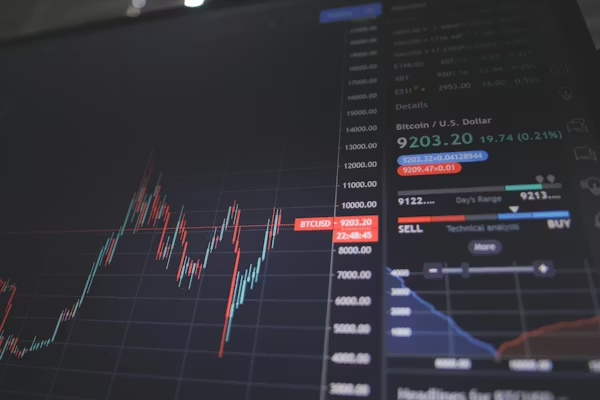
A futures contract is a formal agreement between two parties to buy or sell an asset at a set price on a future date. Unlike spot trading, where transactions happen immediately, futures contracts lock in a price now for a later exchange.
Here is a simple breakdown of how futures contracts operate:
Standardized Contracts: Futures are traded on regulated exchanges (like the Chicago Mercantile Exchange or ICE). Each contract has specific details, including the type of asset, contract size, expiration date, and tick value (the smallest price movement).
Leverage and Margin: Traders only need to deposit a margin, which is a small percentage of the contract’s total value. This leverage allows participants to control large amounts of assets with relatively little money. However, it also means that both profits and losses can be magnified.
Long and Short Positions:
- Long (Buy): You make money if the asset’s price goes up.
- Short (Sell): You profit if the asset’s price falls. This flexibility makes futures valuable for both speculation and hedging.
Mark-to-Market: Futures accounts are updated every day. This means that profits and losses are added or subtracted from your account each day until the contract is either closed or expires.
Expiration and Settlement: Some futures contracts require you to deliver the asset, like oil or wheat, while others settle in cash, meaning you only pay the price difference.
As we covered in our gold trading strategies guide, understanding contract specifications is essential before trading any futures product.
Key Features of Futures Trading
Futures trading has several unique characteristics that distinguish it from other markets:
Standardization: Each futures contract has fixed details, including contract size (e.g., 100 ounces of gold or 1,000 barrels of oil), expiration date (which can be monthly or quarterly), and tick size and tick value (the minimum price movement).
Leverage and Margin: Futures trading require only a small percentage of the contract’s total value as margin, which allows traders to leverage their capital but also increases risk.
Two-Way Trading: Participants can easily take both long (buy) and short (sell) positions, enabling them to profit from both rising and falling markets.
Daily Mark-to-Market: Profits and losses are settled every day, which is called mark-to-market. This ensures that investors maintain enough margin to support their positions.
Expiration Dates: Unlike stocks or forex, futures contracts have specific expiration dates. Traders can either close their position before the contract expires or roll it over into a new contract for the next month.
Underlying Assets: Futures trading can cover a wide range of markets, including:
- Commodities: Oil, gold, wheat, natural gas
- Financials: Bonds, interest rates, currencies
- Indices: S&P 500, Nasdaq, Dow Jones
- Cryptocurrencies: Bitcoin and Ethereum (available on some exchanges)
Example: An investor who believes the S&P 500 index will decline can open a short position, which is not as straightforward in regular share trading.
For a full breakdown of how different asset classes behave, our guide on trading commodities vs indices provides useful context.
Why Trade Futures? (Advantages)
Futures trading offers unique benefits that appeal to both professional and individual participants:
High Liquidity: Major futures markets, like oil, gold, and the S&P 500, have a lot of trading activity, ensuring quick transactions and competitive prices.
Leverage: With margin requirements usually between 5-15% of the contract value, traders can control large positions with a smaller amount of capital.
Flexibility to Go Long or Short: Futures allow traders to profit from both rising and falling markets, making them versatile for speculation and hedging.
Transparency and Regulation: Futures are traded on regulated exchanges like the CME, which ensures standardization, clear pricing, and reduced counterparty risk.
Portfolio Diversification: Futures trading encompass a wide variety of assets, from commodities to indices and bonds, offering traders more ways to diversify their investments.
Risk Management: Businesses and investors use futures to protect against risks. For example, airlines might hedge fuel costs with oil futures, while farmers might hedge crop prices.
Example: If a trader purchases crude oil futures at 80perbarrelandthepriceincreasesto85, they make a profit. Meanwhile, an airline might buy the opposite contract to lock in fuel prices, shielding themselves from escalating oil expenses.
Risks of Futures Trading
While futures offer significant opportunities, they also come with notable risks that traders should be aware of:
Leverage Risk: Because futures are highly leveraged, even small price changes can lead to large profits or losses. Traders can lose more than their initial margin.
Volatility: Markets like oil, gold, or market indices can experience rapid price changes, leading to quick gains or losses.
Margin Calls: If your account balance drops below the required margin, your broker may issue a margin call, asking you to add more funds or risk closing your position.
Complexity: Futures contracts involve expiration dates, rollovers, and margin requirements, making them more complicated than spot trading or stocks.
Expiration Risk: If you hold a futures contract until it expires, it may settle in a way you did not expect:
- Cash settlement: Profits or losses are settled in cash.
- Physical delivery: You may need to take delivery of the asset (like oil barrels or wheat).
Emotional Pressure: Rapid gains or losses in futures trading can cause emotional decision-making, which increases the risk of making mistakes.
As we covered in our risk management guide, position sizing and stop-loss discipline are non-negotiable when trading leveraged products.
Types of Futures Contracts
These contracts span different markets, giving traders and investors many choices. Here are the main categories:
Commodity Futures: Contracts based on raw materials and natural resources.
- Examples: Crude oil, natural gas, gold, silver, wheat, coffee.
- Who uses them? Farmers, producers, and energy companies hedge against price changes; traders speculate on global supply and demand.
Index Futures Trading: Contracts linked to market indices.
- Examples: S&P 500, Nasdaq 100, Dow Jones.
- Who uses them? Investors hedge their portfolios; traders speculate on overall market trends.
Currency Futures Trading: Contracts based on exchange rates between currencies.
- Examples: EUR/USD, GBP/USD, JPY/USD futures.
- Who uses them? Corporations hedge against currency risk; forex traders speculate on currency movements.
Interest Rate and Bond Futures Trading: Contracts based on government bonds or interest rates.
- Examples: U.S. Treasury bond futures, Eurodollar futures.
- Who uses them? Banks and institutional investors hedge against interest rate changes.
Cryptocurrency Futures Trading: A newer category available on select exchanges.
- Examples: Bitcoin and Ethereum futures.
- Who uses them? Traders speculate on cryptocurrency price movements; institutions hedge their digital asset exposure.
Example: An equity trader can use S&P 500 index futures to protect against a potential market downturn, while a commodities trader might use crude oil futures to speculate on energy prices.
For a deeper look at how oil prices drive currency and commodity markets, our guide covers the transmission channels in detail.
How to Start Futures Trading – Step by Step
If you want to begin futures trading, you need to prepare and choose the right broker. Here is an easy-to-follow guide:
- Learn the Basics: Understand what futures are, how margin works, and the risks of leverage. Use educational resources or practice trading in a demo account before risking real money.
- Choose a Regulated Futures Broker: Pick a broker that is licensed by organizations like the CME, CFTC, or NFA. Ensure they offer the futures markets you want to trade.
- Open and Fund Your Account: Accounts for futures usually require a higher minimum deposit than those for forex or shares. Fund your account with an amount you can afford to lose.
- Select a Trading Platform: Most brokers provide access through platforms like MetaTrader 5, NinjaTrader, or their own platforms. Choose one that offers good charting, order management, and risk tools.
- Practice With a Demo Account: Test your strategies without risking real money. Focus on understanding contract sizes, margin requirements, and expiration dates.
- Place Your First Trade:
- Long (Buy): If you think the asset’s price will rise.
- Short (Sell): If you think the asset’s price will fall.
- Monitor Margin and Rollovers: Keep an eye on your margin balance to avoid margin calls. If you want to keep a position open past its expiration, you will need to roll it into the next contract month.
Beginner Tip: If you are planning to start futures trading start with mini or micro futures contracts, which are smaller and less risky. For example, the CME offers E-mini and Micro E-mini futures on the S&P 500 and Nasdaq.
Quick Glossary of Futures Terms
- Futures Trading Contract: An agreement to buy or sell an asset at a set price on a future date.
- Margin: The initial deposit needed to open a futures position, usually a small portion of the contract’s value.
- Leverage: The ability to control large positions with a small amount of money, which can increase both profits and losses.
- Long Position: Buying a futures contract expecting the price will rise.
- Short Position: Selling a futures contract expecting the price will fall.
- Tick Size: The smallest price change allowed for a contract.
- Tick Value: The monetary value of one tick movement in a contract.
- Mark-to-Market: Daily adjustments of accounts to show profits and losses in open positions.
- Rollover: Extending a position by closing a contract before it expires and opening a new one for the next month.
- Settlement: How a contract is finalized, either by delivering the asset or by settling in cash.
- E-mini / Micro Futures: Smaller-sized contracts offered by exchanges like CME, designed for individual traders with less capital.
Futures Trading Examples
Let us look at two scenarios to see how futures trading operates in real scenarios.
Example 1: A Winning Trade
- Setup: You buy 1 gold futures contract at $1,900 per ounce. Each contract represents 100 ounces.
- Action: The price rises to $1,920.
- Outcome: Profit = 20×100=2,000.
Example 2: A Losing Trade
- Setup: You sell 1 crude oil futures contract at $80 per barrel. Each contract represents 1,000 barrels.
- Action: The price rises to $82.
- Outcome: Loss = 2×1,000=2,000.
Example 3: Hedging With Futures
- Setup: An airline expects fuel costs to rise.
- Action: It buys oil futures at $75 per barrel to lock in costs.
- Outcome: If oil rises to $85, the airline pays more in the spot market but gains on the futures contract, which offsets the loss.
Lesson: These contracts can serve both speculative purposes and as a means of hedging against risks. However, because these contracts involve leverage, small price changes can lead to large gains or losses.
Final Thoughts / Next Steps
Futures trading is a versatile market that offers opportunities for speculation, risk hedging, and portfolio diversification. With access to various assets, including commodities, indices, currencies, and even cryptocurrencies, futures allow traders to engage with global markets using leverage and flexibility.
However, with these opportunities come responsibilities. Futures are leveraged products, meaning profits and losses can be amplified. Therefore, effective risk management, discipline, and a clear understanding of contracts are essential.
Here is the best approach for beginners:
- Start small: Trade mini or micro futures to limit your risk.
- Use a demo account first: Practice with virtual funds before trading with real money.
- Focus on one market: Gain experience in a single contract (like gold or the S&P 500) before branching out.
- Always manage margin: Keep an eye on your account balance to avoid margin calls.
- Choose a regulated broker: Work only with brokers supervised by reputable authorities.
When used wisely, futures can be a powerful tool for trading and hedging. Success relies on preparation, education, and effective risk management.
Disclaimer: This article is for educational and informational purposes only. It does not constitute financial advice, trading recommendations, or an offer to buy or sell any asset. Trading futures, forex, commodities, and equities carries significant risk and may not be suitable for all investors. Past performance does not guarantee future results. Some links in this article may be affiliate links. I only recommend brokers and firms I have researched. Always read full terms, contract specifications, and risk disclosures before trading. Do your own research.